Navy could use James Bond-style drone boat to hunt Putin’s shadow fleet
by Tom Cotterill Defence Editor of The Telegraph - 16 February 2026
A James Bond-style drone speedboat that could one day hunt Russia’s shadow fleet is being considered by the UK forces.
The craft looks similar to the fictional jet-powered “Q-Boat”, which was raced through the River Thames by Pierce Bosnan’s 007 in the 1999 film, The World is Not Enough.
Unlike Bond’s boat, these vessels – built by Kraken Technology in Hampshire – do not need a human at the helm and have already been tested by Nato forces in Vladimir Putin’s backyard, the Baltic Sea.
Defence sources have claimed that the drone, called the K3 Scout, is also being looked at to see whether it could one day support specialist missions with UK forces.
Philip Ingram, a retired colonel in British military intelligence who is now a defence analyst, said: “These boats are right out of a James Bond movie.
“And if you don’t have to put people on a boat, you can make the designs much sexier and sleeker. That can make it stealthier – and that’s something that is right out of 007’s playbook.”
Made of a specialised lightweight composite fibreglass hull, the unmanned 36ft vessel is able to travel through water at breakneck speeds of about 50 knots – almost 60mph.
The £280,000 boats can operate at sea for 30 days and carry a payload of 600kg, which can hold anything from sophisticated spy and surveillance tech to weapons.
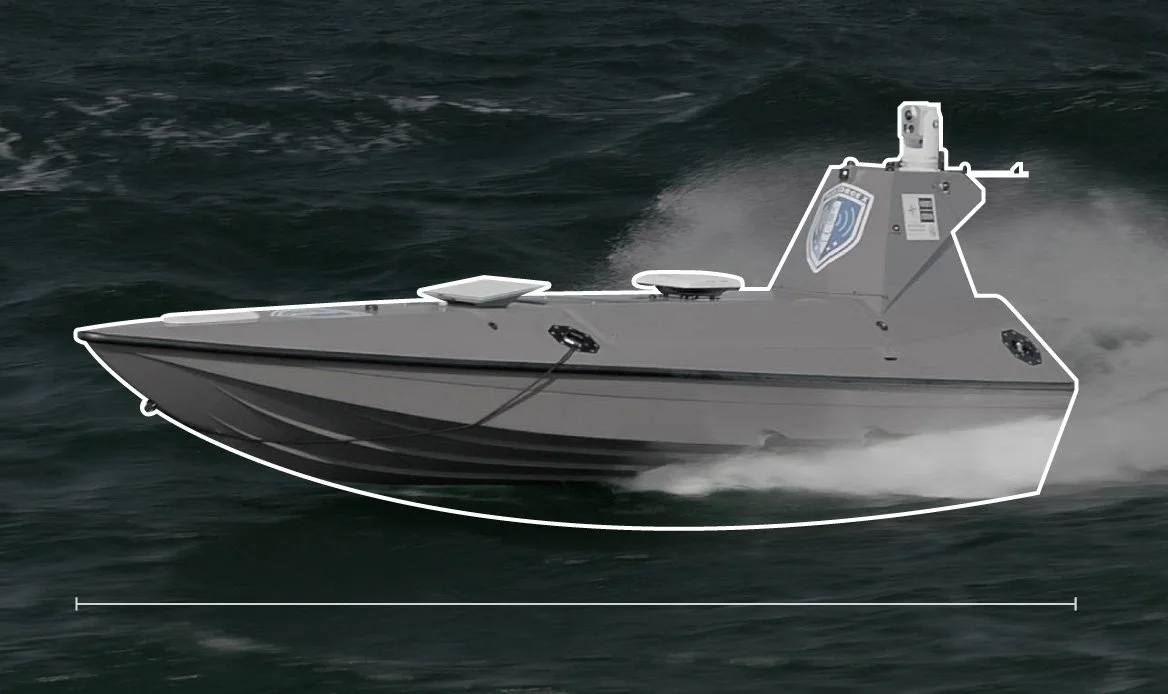
K3 SCOUT Medium (USV)
-
50 – 55 kts top-end speed
-
650 nautical mile range at 25 kts
-
600kg
-
30 days
-
2,550kg
-
Nato
There are ongoing concerns over the security of Britain’s critical undersea infrastructure, which military chiefs have warned is at risk of being sabotaged by the Russians.
The Kremlin has been accused of using civilian tankers and suspected spy ships such as the Yantar to map out Britain’s network of data cables and pipelines lying on the seabed.
Mal Crease, the chief executive of Kraken, said the new hi-tech boats could play a role in helping to secure such remote sites, as well as others such as offshore windfarms and oil rigs.
“You could put a fleet of Scouts across the Channel and have effectively a full service, 24/7 intelligence, surveillance and reconnaissance capability that would give you eyes on everything that’s going on,” said the 56-year-old entrepreneur.
Asked whether the boat could keep tabs on suspicious Russian vessels entering UK waters, Mr Crease added: “Yes, absolutely.”
Kraken’s K3 Scouts have already been trialled in war-game-style scenarios with Nato, having joined the alliance’s Task Force X in June last year for tests in the Baltic Sea.
The company, which is based in Fareham and originally built high-performance speed boats before moving into defence, has also won a $49m (£36m) deal with the United States Special Operations Command to develop new uncrewed surface and subsurface vessels.
As part of this, the team has been building a prototype submersible dubbed the K4 Manta, which developers hope will be able to glide under the waves at speeds of up to 50 knots.
The teardrop-shaped craft would be able to carry a payload of about 100kg, which could include an array of sensors and surveillance systems or weapons.
With an endurance at sea of about seven days, the 18 ft vessel could potentially be used by US special forces to provide reconnaissance, with developers saying the submersible could even deploy its own mini-drones to scout the area.
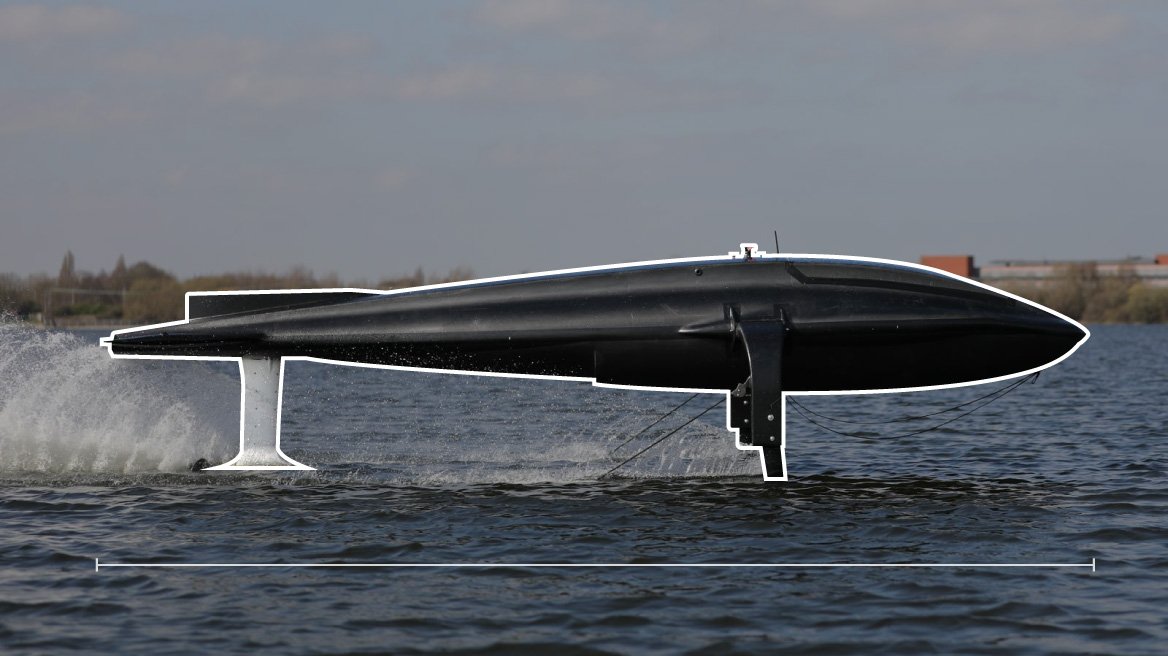
K4 MANTA (USSV) engineering prototype (the submersible)
-
500kg
-
50 kt
-
300 nautical miles at 25kts
-
10m - 30m
-
Autonomous
-
100kg
Plans are also in the works to create larger 36ft and 54ft variants of the Manta with a significantly increased payload, range and endurance.
The Royal Navy is looking to expand and create a “hybrid” fleet of warships and drones as part of its Atlantic Bastion project, which aims to fortify the UK’s maritime defences in the North Atlantic.
No decision has been taken by the Navy on whether Kraken’s unmanned drones will be bought as part of Atlantic Bastion.
However, Mr Crease said Kraken was already receiving interest from countries worldwide.
He said: “There are currently agreements being penned in the Middle East, in Asia Pacific, in the US, North America and also in the Baltics.
“This year is all about execution. We’re winning contracts as fast as we can deliver them now. The trick for us this year is to break the bow wave of that production cycle and put boats on the shelves and build stock, which is the way the automotive industry does it.”
Britain is looking to boost its defence industry amid concerns over Russia. However, the nation’s Defence Investment Plan, which is set to spell out how the UK will spend its money on military tech over the next decade, is well behind schedule.
The document was meant to be revealed in the autumn but is yet to be published. It has prompted concerns from Air Chief Marshal Sir Richard Knighton, the head of the military who reportedly confronted Sir Keir Starmer, the Prime Minister, before Christmas over the delays, warning that there was not enough cash to deliver the plans without making cuts.
Speaking at the Munich Security Conference on Saturday, Sir Keir said efforts to speed up military procurement needed to be redoubled.
He said: “We have huge defence capabilities. Yet, too often, all of this has added up to less than the sum of its parts.
“Across Europe, fragmented industrial planning and long, drawn out procurement mechanisms have led to gaps in some areas – and massive duplication in others.”